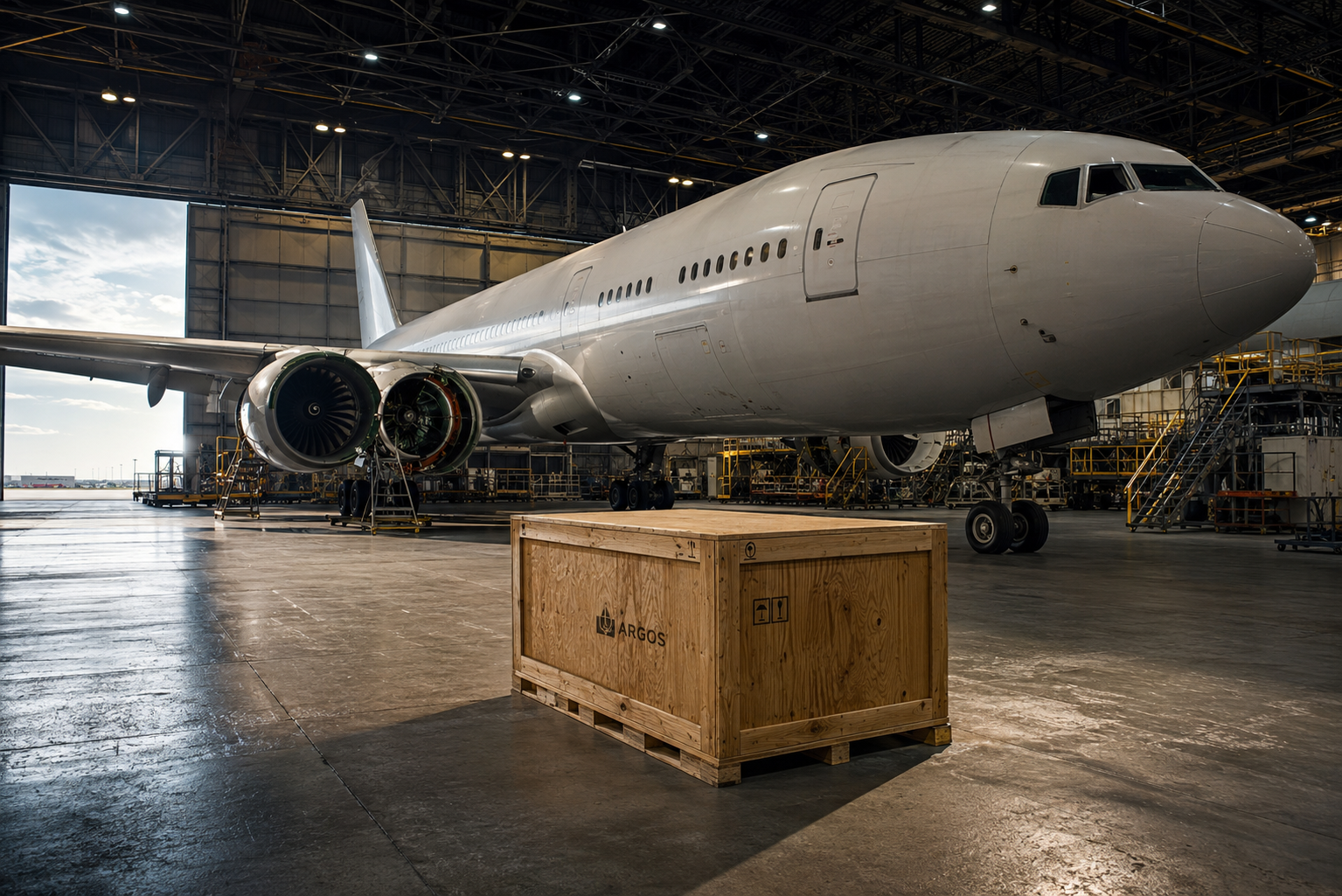
AOG - Aircraft on Ground — is the most expensive two-letter designation in commercial aviation. When a commercial aircraft is grounded due to a missing or failed component, the clock starts immediately. A grounded narrow-body aircraft costs an airline $10,000 to $50,000 per hour in lost revenue, crew costs, passenger rebooking, and operational disruption. A wide-body on a long-haul route can exceed $150,000 per hour.
Airlines, MRO facilities, and parts distributors treat AOG situations with a level of urgency that doesn't exist anywhere else in freight logistics. Parts move on the next available flight. Crating has to happen today — not in two to three business days.
This post explains what AOG crating involves, what makes aircraft parts different from standard industrial cargo, and how professional crating supports fast, safe movement when the pressure is on.
Airlines, MRO facilities, and parts distributors treat AOG situations with a level of urgency that doesn't exist anywhere else in freight logistics. Parts move on the next available flight. Crating has to happen today — not in two to three business days.
This post explains what AOG crating involves, what makes aircraft parts different from standard industrial cargo, and how professional crating supports fast, safe movement when the pressure is on.
What AOG Actually Means for Freight
When a part is designated AOG, every step in its journey is compressed. A part that might normally ship on a standard freight schedule becomes next-flight-out (NFO) air freight, or same-day ground courier for regional movements. Freight forwarders, parts distributors, and MRO facilities have AOG desks staffed around the clock specifically to manage these movements.
The crating requirement doesn't disappear because the timeline is compressed — it gets harder. The part still needs to be properly packaged and documented. It still needs to meet carrier acceptance standards. If it's crossing a border, ISPM-15 certified wood packaging is still required. And if it arrives at the aircraft in damaged condition because the crating was rushed or inadequate, the AOG situation isn't resolved - it's made worse.
The answer isn't to skip proper packaging. It's to have a crating partner who can move as fast as the AOG situation requires.
The crating requirement doesn't disappear because the timeline is compressed — it gets harder. The part still needs to be properly packaged and documented. It still needs to meet carrier acceptance standards. If it's crossing a border, ISPM-15 certified wood packaging is still required. And if it arrives at the aircraft in damaged condition because the crating was rushed or inadequate, the AOG situation isn't resolved - it's made worse.
The answer isn't to skip proper packaging. It's to have a crating partner who can move as fast as the AOG situation requires.
Why Aircraft Parts Need More Than a Cardboard Box
Aircraft components are not standard industrial cargo. Several characteristics make them demanding to package correctly:
Precision tolerances. Engine components, hydraulic actuators, flight control surfaces, and landing gear parts are machined to tolerances measured in thousandths of an inch. Any contact damage during transit — a corner impact, a surface scratch — can make the part non-airworthy. It then needs to be returned for inspection and re-certification before it can be installed. A damaged part in an AOG situation doesn't just cost the price of replacement; it extends the aircraft's downtime by days.
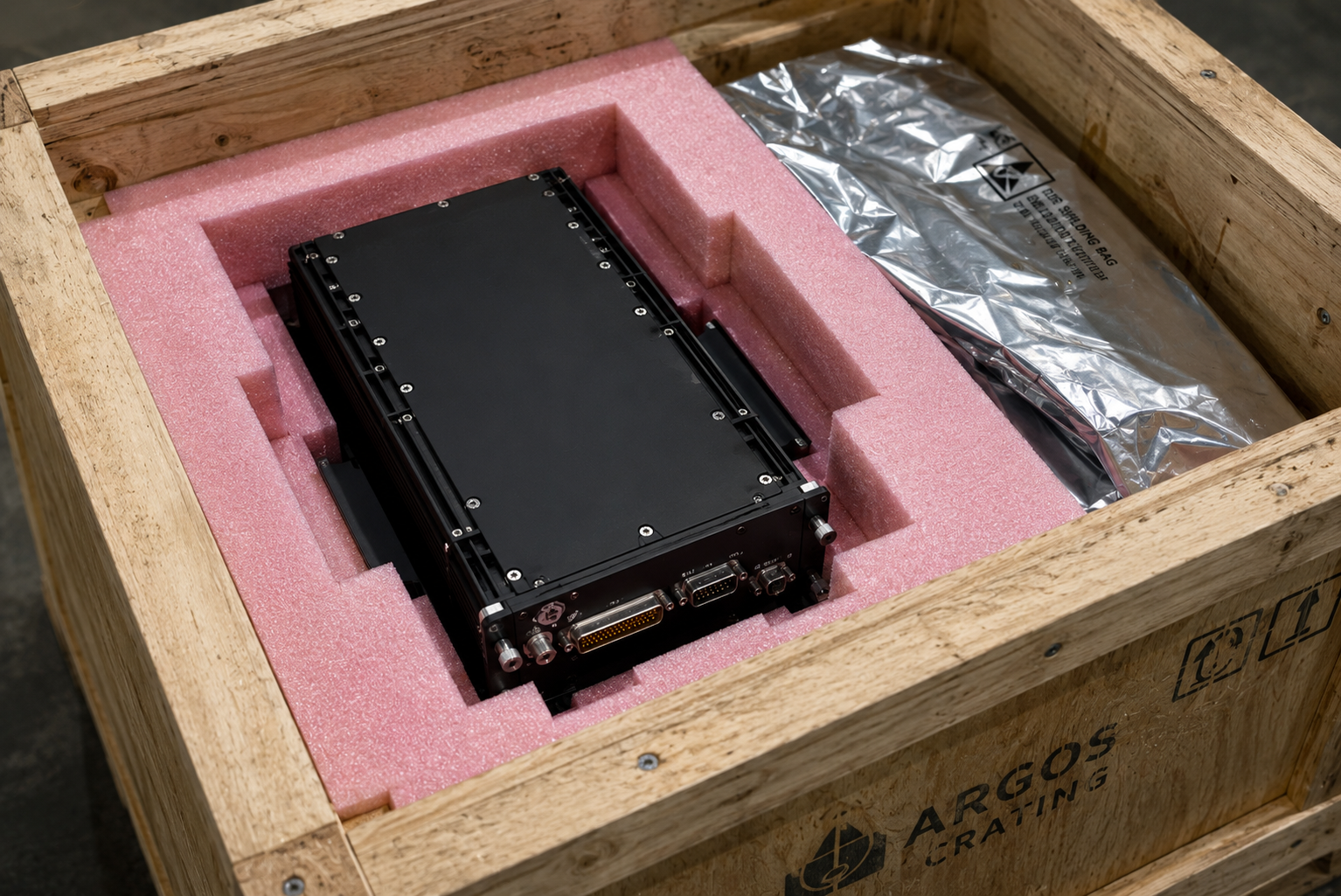
ESD sensitivity. Avionics - flight management computers (FMCs), air data inertial reference units (ADIRUs), transponders, radar systems — are highly sensitive to electrostatic discharge. Improper packaging without anti-static protection can damage components invisibly. The part looks fine, gets installed, and fails in service. Proper avionics packaging uses ESD-shielding bags, anti-static foam, and sealed barriers with humidity indicators for long transits.
Value. A single turbine blade can be worth $10,000 or more. An engine cowling assembly runs into six figures. Avionics LRUs (Line Replaceable Units) range from $5,000 to $50,000+ depending on the aircraft type. The cost of proper packaging is negligible relative to the cost of a damaged part.
Residual hazardous materials. Engine components, hydraulic actuators, and fuel system parts may contain residual fuel, hydraulic fluid, or oils. Depending on quantity, these may be classified as dangerous goods under IATA Dangerous Goods Regulations. DG classification affects carrier acceptance, documentation requirements, and the outer packaging specs the crate must meet.
Airworthiness documentation. Every aircraft part that goes into a certificated aircraft must travel with its airworthiness release documentation — an FAA Form 8130-3 (for US-registered aircraft) or EASA Form 1 (for European-registered aircraft). These documents travel with the part, separate from the crate, and must not be damaged or separated from the shipment during transit. Crating needs to account for secure document storage alongside the part.
Precision tolerances. Engine components, hydraulic actuators, flight control surfaces, and landing gear parts are machined to tolerances measured in thousandths of an inch. Any contact damage during transit — a corner impact, a surface scratch — can make the part non-airworthy. It then needs to be returned for inspection and re-certification before it can be installed. A damaged part in an AOG situation doesn't just cost the price of replacement; it extends the aircraft's downtime by days.
ESD sensitivity. Avionics - flight management computers (FMCs), air data inertial reference units (ADIRUs), transponders, radar systems — are highly sensitive to electrostatic discharge. Improper packaging without anti-static protection can damage components invisibly. The part looks fine, gets installed, and fails in service. Proper avionics packaging uses ESD-shielding bags, anti-static foam, and sealed barriers with humidity indicators for long transits.
Value. A single turbine blade can be worth $10,000 or more. An engine cowling assembly runs into six figures. Avionics LRUs (Line Replaceable Units) range from $5,000 to $50,000+ depending on the aircraft type. The cost of proper packaging is negligible relative to the cost of a damaged part.
Residual hazardous materials. Engine components, hydraulic actuators, and fuel system parts may contain residual fuel, hydraulic fluid, or oils. Depending on quantity, these may be classified as dangerous goods under IATA Dangerous Goods Regulations. DG classification affects carrier acceptance, documentation requirements, and the outer packaging specs the crate must meet.
Airworthiness documentation. Every aircraft part that goes into a certificated aircraft must travel with its airworthiness release documentation — an FAA Form 8130-3 (for US-registered aircraft) or EASA Form 1 (for European-registered aircraft). These documents travel with the part, separate from the crate, and must not be damaged or separated from the shipment during transit. Crating needs to account for secure document storage alongside the part.
ATA-300: The Packaging Standard for Aircraft Parts
ATA-300 is the industry standard for aircraft spare parts packaging, originally developed by the Air Transport Association (now maintained by Airlines for America). It defines two categories:
Category I — Returnable packaging. Reusable cases designed for 100 or more use cycles — typically rigid aluminum or composite cases with custom foam inserts cut to the part's exact geometry. Airlines and MRO facilities maintain stocks of Category I cases for their most commonly moved parts.
Category II — Non-returnable (expendable) packaging. Purpose-built, one-time-use packaging for parts that don't have a dedicated returnable case, or for one-off movements where a custom case isn't available or practical. This is where custom wooden crating fits directly.
For Category II packaging, ATA-300 specifies structural requirements for the outer container, cushioning requirements for the part inside, and labeling requirements on the exterior — part number, serial number, quantity, airworthiness documentation reference.
A professional crating company builds Category II ATA-300 compliant packaging by engineering the crate around the specific part: custom foam blocking to isolate precision surfaces, anti-static protection for electronic components, and a base skid and outer panels sized to the part's actual geometry — not the nearest available standard size.
Category I — Returnable packaging. Reusable cases designed for 100 or more use cycles — typically rigid aluminum or composite cases with custom foam inserts cut to the part's exact geometry. Airlines and MRO facilities maintain stocks of Category I cases for their most commonly moved parts.
Category II — Non-returnable (expendable) packaging. Purpose-built, one-time-use packaging for parts that don't have a dedicated returnable case, or for one-off movements where a custom case isn't available or practical. This is where custom wooden crating fits directly.
For Category II packaging, ATA-300 specifies structural requirements for the outer container, cushioning requirements for the part inside, and labeling requirements on the exterior — part number, serial number, quantity, airworthiness documentation reference.
A professional crating company builds Category II ATA-300 compliant packaging by engineering the crate around the specific part: custom foam blocking to isolate precision surfaces, anti-static protection for electronic components, and a base skid and outer panels sized to the part's actual geometry — not the nearest available standard size.
International AOG Movements and ISPM-15
For AOG movements crossing an international border - from Canada to the US, or internationally - ISPM-15 certification applies to all wood packaging, including any wooden crate or skid.
For AOG freight where every hour counts, discovering at a US port of entry that the crate's lumber isn't ISPM-15 certified is a costly problem. The part gets held, the aircraft stays grounded, and the airline's losses continue accumulating while the paperwork gets sorted.
ISPM-15 certified lumber for the crate is a baseline requirement for international AOG movements, not a special request. All Argos export crating uses certified lumber as standard.
For AOG freight where every hour counts, discovering at a US port of entry that the crate's lumber isn't ISPM-15 certified is a costly problem. The part gets held, the aircraft stays grounded, and the airline's losses continue accumulating while the paperwork gets sorted.
ISPM-15 certified lumber for the crate is a baseline requirement for international AOG movements, not a special request. All Argos export crating uses certified lumber as standard.
How AOG Crating Works on a Compressed Timeline
The standard industrial crating process - site assessment, design review, material procurement, build — takes one to three business days for most jobs. AOG situations don't have that window. Here's how the timeline compresses:
Phone or email assessment. Rather than a site visit, an AOG assessment happens by phone or email with part dimensions, weight, destination, origin point, and urgency level. For experienced crating teams, this is enough to spec a Category II solution for most aircraft components.
Material on hand. An AOG-capable crating shop maintains stock of common lumber dimensions, foam grades (including ESD foam), anti-static bags, and hardware. Jobs don't wait on material delivery.
Build time. For most aircraft components — avionics LRUs, hydraulic actuators, flight control surfaces, engine accessories — crating takes two to four hours for a single piece. Large components like cowlings or thrust reversers take longer but are still same-day capable for experienced crews.
Proximity to the airport. For YYZ-bound air freight, crating near Pearson Airport eliminates the transit time from a distant facility to the cargo terminal. Argos Crating is based in Mississauga, minutes from Pearson's cargo facilities — which matters when the freight forwarder needs the crate at the cargo terminal by a specific booking cutoff.
Documentation. A complete ISPM-15 certification document, weight and dimension confirmation, and packing list are prepared simultaneously with the crate build and available when the shipment is tendered to the carrier.
Phone or email assessment. Rather than a site visit, an AOG assessment happens by phone or email with part dimensions, weight, destination, origin point, and urgency level. For experienced crating teams, this is enough to spec a Category II solution for most aircraft components.
Material on hand. An AOG-capable crating shop maintains stock of common lumber dimensions, foam grades (including ESD foam), anti-static bags, and hardware. Jobs don't wait on material delivery.
Build time. For most aircraft components — avionics LRUs, hydraulic actuators, flight control surfaces, engine accessories — crating takes two to four hours for a single piece. Large components like cowlings or thrust reversers take longer but are still same-day capable for experienced crews.
Proximity to the airport. For YYZ-bound air freight, crating near Pearson Airport eliminates the transit time from a distant facility to the cargo terminal. Argos Crating is based in Mississauga, minutes from Pearson's cargo facilities — which matters when the freight forwarder needs the crate at the cargo terminal by a specific booking cutoff.
Documentation. A complete ISPM-15 certification document, weight and dimension confirmation, and packing list are prepared simultaneously with the crate build and available when the shipment is tendered to the carrier.
What Information We Need to Quote an AOG Job
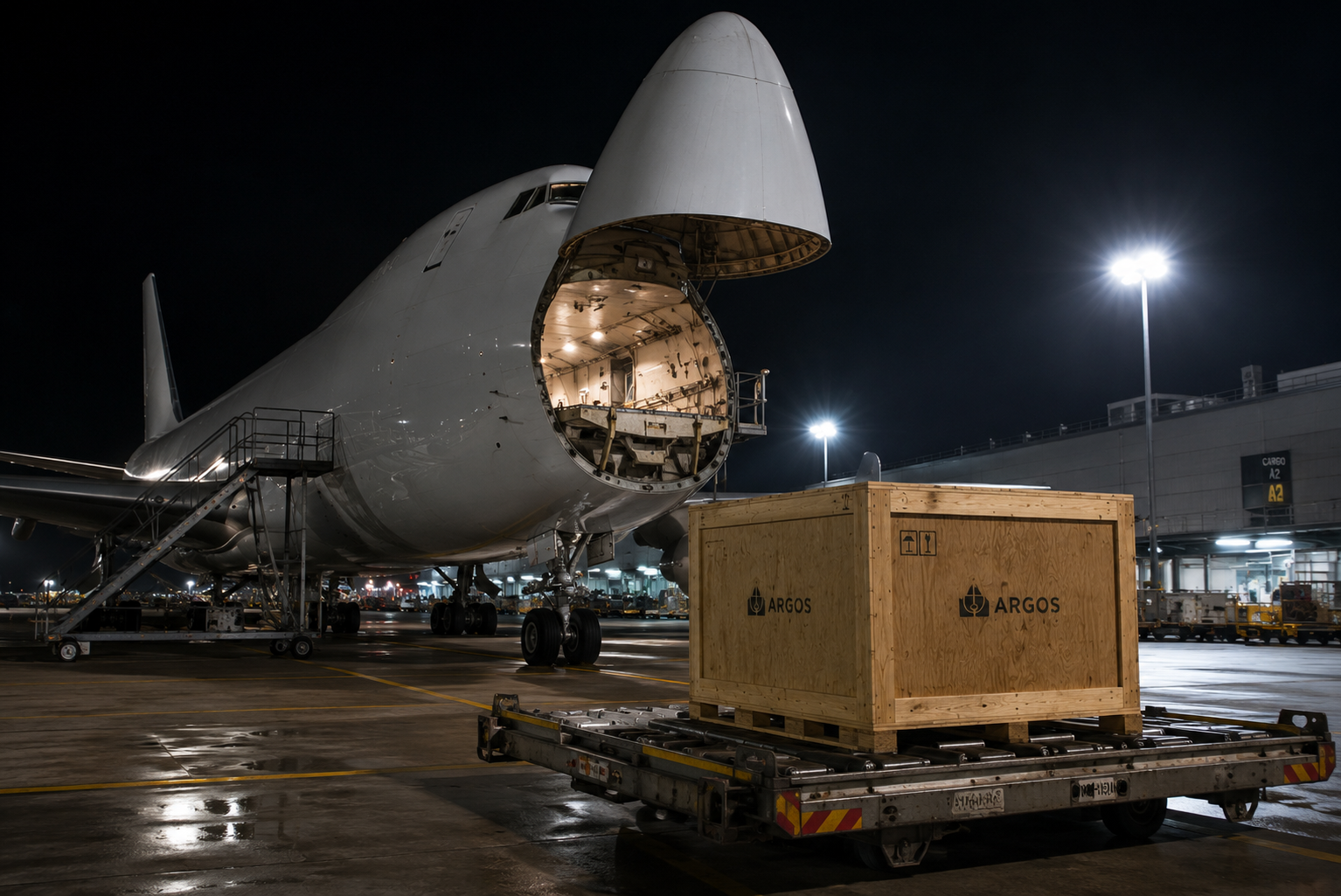
To quote an urgent crating job by phone or email, we need:
With this information, we can confirm capability and turnaround within the hour.
- Part description (type of component, aircraft type if known)
- Dimensions (length × width × height, including any protrusions)
- Weight
- Destination (domestic or international, and the final destination point)
- ESD sensitivity (yes/no)
- Dangerous goods (any known fuel, fluid, or chemical residue)
- Timeline (when does it need to be at the carrier/airport?)
With this information, we can confirm capability and turnaround within the hour.
FAQ
Q: What is AOG crating and when do you need it? AOG (Aircraft on Ground) crating is purpose-built packaging for aircraft parts that need to move urgently because a grounded aircraft is waiting for them. When an aircraft can't fly due to a missing or failed component, the part needs to reach the aircraft as fast as possible — which means same-day or overnight crating, not a standard multi-day build schedule.
Q: What is ATA-300 packaging for aircraft parts? ATA-300 is the industry standard for aircraft spare parts packaging, developed by Airlines for America. Category I covers reusable cases; Category II covers purpose-built, expendable packaging — which includes custom wooden crates built around the specific part. ATA-300 Category II crating meets the structural, cushioning, and labeling requirements for aircraft parts in freight.
Q: Do aircraft parts need ISPM-15 certified crating for shipments to the US? Yes. Any wooden crate or skid used for cross-border shipments — including urgent AOG movements — must use ISPM-15 certified lumber. Non-certified wood packaging is flagged by USDA APHIS at the US border. For an AOG situation, a customs hold at the border extends the aircraft's downtime significantly. All our export crating uses ISPM-15 certified lumber as standard.
Q: Can you crate avionics and ESD-sensitive aircraft components? Yes. Avionics and electronic LRUs require anti-static packaging — ESD-shielding bags, anti-static foam, and humidity indicators for sealed enclosures — before going into the outer wooden crate. We build crates for avionics, flight management computers, transponders, radar systems, and other ESD-sensitive aircraft components.
Q: How quickly can you complete an AOG crating job? For most aircraft components — avionics, hydraulic actuators, flight control surfaces, engine accessories — same-day build is available. Call or email with part dimensions, weight, and destination and we'll confirm turnaround within the hour. We're based in Mississauga, minutes from Pearson Airport cargo facilities.
Q: Do you work with freight forwarders and MRO facilities on AOG shipments? Yes. We regularly work with freight forwarders, MRO facilities, parts distributors, and airline technical operations teams on urgent aircraft component movements through the YYZ corridor. We provide complete documentation — ISPM-15 certification, packing list, gross and net weights — ready for carrier tender.
Q: What is ATA-300 packaging for aircraft parts? ATA-300 is the industry standard for aircraft spare parts packaging, developed by Airlines for America. Category I covers reusable cases; Category II covers purpose-built, expendable packaging — which includes custom wooden crates built around the specific part. ATA-300 Category II crating meets the structural, cushioning, and labeling requirements for aircraft parts in freight.
Q: Do aircraft parts need ISPM-15 certified crating for shipments to the US? Yes. Any wooden crate or skid used for cross-border shipments — including urgent AOG movements — must use ISPM-15 certified lumber. Non-certified wood packaging is flagged by USDA APHIS at the US border. For an AOG situation, a customs hold at the border extends the aircraft's downtime significantly. All our export crating uses ISPM-15 certified lumber as standard.
Q: Can you crate avionics and ESD-sensitive aircraft components? Yes. Avionics and electronic LRUs require anti-static packaging — ESD-shielding bags, anti-static foam, and humidity indicators for sealed enclosures — before going into the outer wooden crate. We build crates for avionics, flight management computers, transponders, radar systems, and other ESD-sensitive aircraft components.
Q: How quickly can you complete an AOG crating job? For most aircraft components — avionics, hydraulic actuators, flight control surfaces, engine accessories — same-day build is available. Call or email with part dimensions, weight, and destination and we'll confirm turnaround within the hour. We're based in Mississauga, minutes from Pearson Airport cargo facilities.
Q: Do you work with freight forwarders and MRO facilities on AOG shipments? Yes. We regularly work with freight forwarders, MRO facilities, parts distributors, and airline technical operations teams on urgent aircraft component movements through the YYZ corridor. We provide complete documentation — ISPM-15 certification, packing list, gross and net weights — ready for carrier tender.
Move Your Aircraft Part Today
Argos Crating builds ATA-300 Category II crating for aircraft components, avionics, engine parts, and aerospace cargo — with same-day capability and full documentation for domestic and international AOG movements. Based in Mississauga, minutes from Pearson Airport.
Call for urgent AOG crating → | Aircraft crating services →
Call for urgent AOG crating → | Aircraft crating services →